
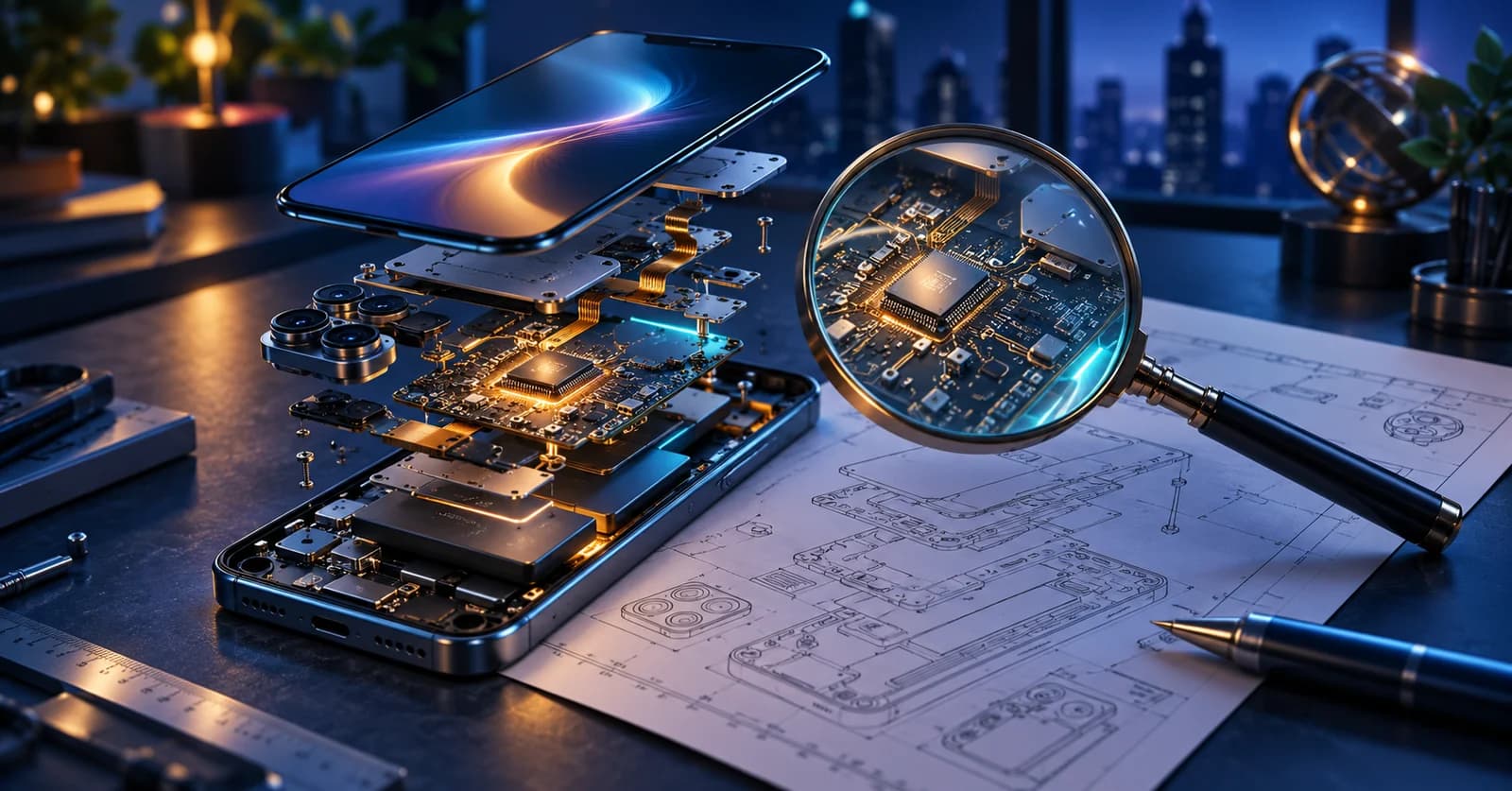
A patent for mobile applications may protect a qualifying invention implemented through an app. Having an app idea, original code or an App Store listing does not itself establish patentability. The assessment depends on the claimed invention, earlier disclosures and the law of the country where protection is sought. USPTO patent essentials explains why an idea alone is insufficient.
Written by the Esperto Technologies engineering team. Sources checked 4 October 2026. This is general educational information, not a legal opinion on your invention. Ask a qualified patent professional in your intended filing countries to assess eligibility, disclosure and filing deadlines.
What does a mobile application patent actually cover?
Start by separating the product from the possible invention inside it. A delivery app might contain account registration, maps, payments and a proposed new way for devices to exchange information when connectivity fails. The useful engineering question is which mechanism differs from existing approaches, how it works and what evidence supports that difference. A feature list is a starting point for discovery, not a patent claim.
A patent professional determines the appropriate claim scope. Your development team should describe what has actually been designed or built, identify assumptions and explain the surrounding components. Renaming a familiar workflow or adding an AI model is not evidence that the underlying mechanism is new.
Can you patent a mobile app in India?
India's Section 3(k) excludes mathematical and business methods, computer programmes per se and algorithms. This makes a blanket promise to patent any app misleading. Read Section 3 of the Patents Act for the statutory exclusions.
The Indian Patent Office's 2025 Computer Related Inventions guidelines discuss technical effects and technical contributions when assessing computer-related claims. They do not impose a general requirement for novel hardware. A claimed technical improvement still needs examination under the applicable exclusions and other patentability requirements; putting a business method on a phone does not automatically overcome Section 3(k).
For an engineering discussion, describe the limitation, the proposed mechanism and the measurable effect. For example, a team investigating offline synchronisation could document message order, conflict handling and network traffic under repeatable conditions. That is an illustrative documentation exercise, not an example we have determined to be patentable.
How are mobile app patents assessed in the United States?
US software-related claims face subject-matter eligibility analysis as well as requirements such as novelty, non-obviousness and adequate disclosure. The USPTO eligibility guidance explains the treatment of abstract ideas and practical applications. Neither the word “software” nor the presence of a phone decides the outcome by itself. A US patent practitioner should assess the actual proposed claims.
What should happen before a public app launch?
Make an inventory of anything already shared: public repositories, demo videos, conference talks, product pages, pitch events and store releases. Include dates, recipients and whether access was restricted. Give that record to your patent professional before choosing a filing and launch sequence.
Public disclosure can affect novelty. Grace periods differ between countries, so do not assume a US exception applies elsewhere. WIPO recommends considering filing before public disclosure and explains that patent rights are territorial. Publishing a demo privately to a named reviewer and posting it publicly are different operational events; keep an accurate record of both.
India residents considering an overseas first filing should also ask about Section 39 foreign-filing restrictions. The permission and prior-India-filing rules need to be checked against the particular circumstances. Choosing a US customer market does not by itself settle where you may first file.
Provisional application, complete application and granted patent
These are different stages. In the US, a provisional application is not examined and does not become a granted patent on its own. A corresponding nonprovisional application generally needs to be filed within 12 months to preserve the provisional benefit, and the earlier disclosure must support the later claimed subject matter. See the USPTO provisional application guidance. Treat deadline management as your practitioner's responsibility rather than a reminder to revisit next year.
Terminology and procedures differ internationally. Ask your adviser for a written plan showing the jurisdiction, type of filing, required material, fees and next deadline. Do not use “patented” in marketing merely because an application has been submitted.
A practical path from app idea to a patent discussion
- Define the product problem. Identify users, devices, operating conditions and the failure of the current approach.
- Describe the technical mechanism. Prepare a system diagram and a sequence of operations, including exceptions.
- Record known alternatives. List papers, products, repositories and patent documents already known to the team without declaring them legally irrelevant.
- Ask a patent professional to assess the invention. Agree search scope, jurisdictions and disclosure decisions.
- Build only the evidence needed next. A targeted experiment may answer a technical uncertainty more effectively than a complete consumer app.
- Coordinate release planning. Keep engineering milestones and practitioner-confirmed filing deadlines in one project plan.
How much should you budget?
Separate development from legal work. An engineering estimate can cover discovery, diagrams, prototype implementation, experiments and documentation. Ask the patent professional to quote searches, drafting, official fees, examination responses and later maintenance separately. A single “app patent price” hides differences in jurisdictions and scope. Esperto provides a technical estimate after discovery and does not quote a guaranteed patent outcome.
Frequently asked questions
Do I need a finished app before speaking to a patent professional?
No. Discuss the proposed mechanism and disclosure timing early. Ask what technical detail is needed before funding a full build. A prototype can help explain behaviour, but it cannot substitute for an adequate filing description.
Will one filing protect my app worldwide?
No. A filing strategy must address the intended countries. International procedures can coordinate applications, but they do not create a single worldwide granted patent. See WIPO guidance on territorial protection.
Does owning the source code mean I own a patent?
These are separate questions. Read our comparison of mobile app patents, copyright and trademarks, then review ownership and contributor agreements with your adviser.
What should I bring to the first technical meeting?
Bring a non-confidential description of the problem, the project stage, intended markets and your next release date. Use our patent app documentation checklist to organise more detailed material after agreeing how it can be shared.
Turn the technical idea into a reviewable system
Esperto can help document architecture, develop a focused prototype and organise implementation evidence for your patent professional. Explore our mobile app patent technical support or mobile app development services. Start with a non-confidential summary; arrange the appropriate confidentiality terms before sharing unpublished technical details.