
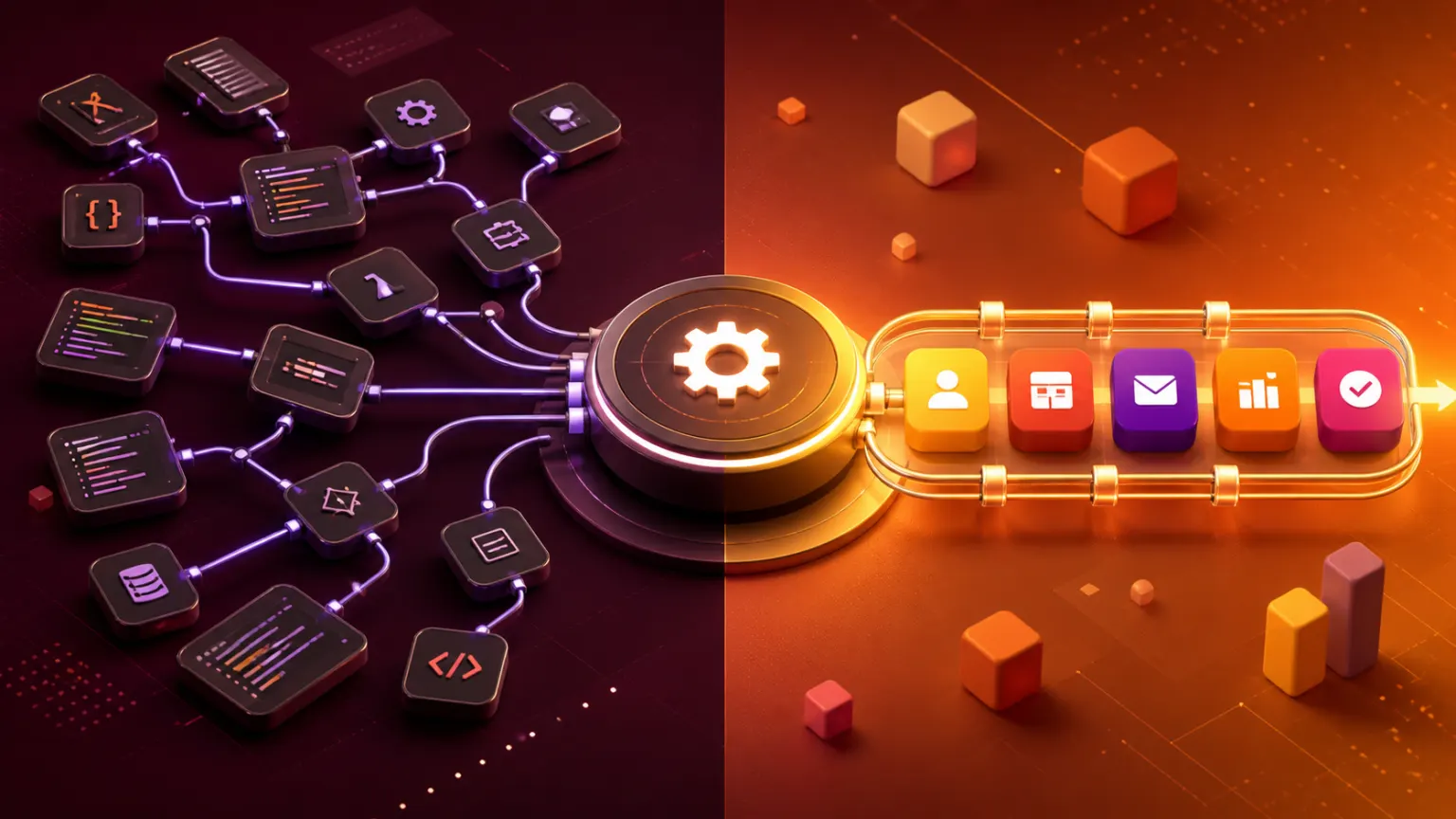
n8n vs Zapier is mainly a choice between control and convenience. n8n is a fair-code automation platform with cloud and self-hosted options, flexible nodes and developer-friendly logic. Zapier provides a highly accessible managed platform with more than 9,000 app integrations and a large no-code ecosystem.
n8n vs Zapier at a glance
| Area | n8n | Zapier |
|---|---|---|
| Deployment | Cloud, npm and self-hosted options | Managed cloud platform |
| Ideal user | Developers and technical operations teams | Business users and cross-functional teams |
| Integrations | Built-in nodes plus HTTP APIs and custom nodes | 9,000+ apps plus private integrations and SDK |
| Pricing unit | Paid plans emphasise workflow executions | Task-based usage |
| Data control | Strong self-hosting option | Managed security and enterprise controls by plan |
Reviewed 8 August 2026. Verify current details in the n8n documentation and Zapier pricing page.
Ease of use
Zapier is designed to help non-developers connect familiar apps using trigger-and-action workflows. Its templates, authentication handling and large integration library can shorten time to the first working automation. n8n also provides a visual builder, but exposes more technical control and can require knowledge of APIs, JSON, credentials and infrastructure.
For a sales manager connecting a lead form to a CRM and email tool, Zapier may be faster. For an engineering team orchestrating internal APIs with branching, loops and custom code, n8n may be more natural.
Integrations
Zapier’s 9,000+ app catalogue is a major advantage, particularly for mainstream SaaS products. Zapier handles authentication, token refresh and many app-specific actions. n8n connects built-in integrations and any app with an API, and supports custom nodes. A smaller catalogue is less important when the team is comfortable calling HTTP endpoints directly.
Audit the exact triggers and actions you need. An integration existing does not guarantee it exposes every object, field, webhook or admin operation.
Workflow flexibility
n8n supports complex branching, data manipulation, custom JavaScript or Python in supported contexts, sub-workflows and developer-oriented debugging. Zapier offers multi-step Zaps, filters, paths, loops, webhooks and code, while optimising the experience for accessibility. Both can build serious systems; n8n generally gives technical users more direct control.
Self-hosting and data control
Self-hosting is n8n’s clearest differentiator. It can support privacy, network and deployment requirements when an organisation has the expertise to secure, update, back up and monitor the system. Self-hosted does not automatically mean secure: operational responsibility shifts to your team.
Zapier is managed, reducing infrastructure work. Enterprise plans add governance controls. Organisations should review data flows, regional requirements, retention, subprocessors, auditability and secrets management for either platform.
AI automation
n8n combines business-process automation with AI capabilities and can build agentic or retrieval workflows using model and vector-store integrations. Zapier adds AI steps, Agents, MCP and SDK access across its integration ecosystem. Zapier may win on rapid access to business actions; n8n may win when engineers need granular orchestration and model control.
Pricing: executions vs tasks
n8n’s paid pricing is centred on workflow executions; current plan guidance says paid plans include unlimited steps and users, while limits depend on executions and tier. Zapier uses task-based pricing: successful action steps and some programmatic calls consume tasks, with rates varying by operation. A single n8n execution may contain many steps, while a multi-step Zap can consume multiple tasks.
Model your monthly volume with real workflows, error retries, loops and growth. Include hosting and engineering time in n8n’s total cost, and task overages plus premium plan needs in Zapier’s.
Reliability and governance
Both require alerting, retry design, idempotency, credential rotation and ownership. Zapier reduces platform operations and provides team or enterprise administration by plan. n8n gives self-hosted teams more deployment control but makes them responsible for uptime and upgrades.
Who should choose each platform?
Choose n8n if:
- Self-hosting or private network access is important.
- Developers will own complex workflows.
- You need custom APIs, transformations and flexible code.
- Execution-based economics suit long workflows.
Choose Zapier if:
- Business users need to automate quickly.
- Your apps are already in Zapier’s broad catalogue.
- You prefer managed infrastructure and authentication.
- Templates and rapid cross-team adoption matter.
Final verdict
n8n is the better fit for technical control, extensibility and self-hosting. Zapier is the better fit for speed, integration breadth and business-user accessibility. Pilot the same three workflows on both and compare build time, monthly usage, maintenance and failure recovery.
Frequently asked questions
Is n8n free?
n8n offers a self-hosted Community Edition, while n8n Cloud and advanced offerings are paid. Hosting still has infrastructure costs.
Does Zapier require coding?
No for many workflows, though webhooks, custom actions and code can extend advanced automations.
Can n8n replace Zapier?
Often, but migration effort depends on app coverage, workflow complexity, governance and who will maintain the system.