
Operations & engineering case study · 2026
One source of truth for every fuel transaction.
How FuelOps connects sales, nozzle meters, tank inventory, shifts, collections, credit, accounting, bank reconciliation and GST controls in one multi-outlet platform.
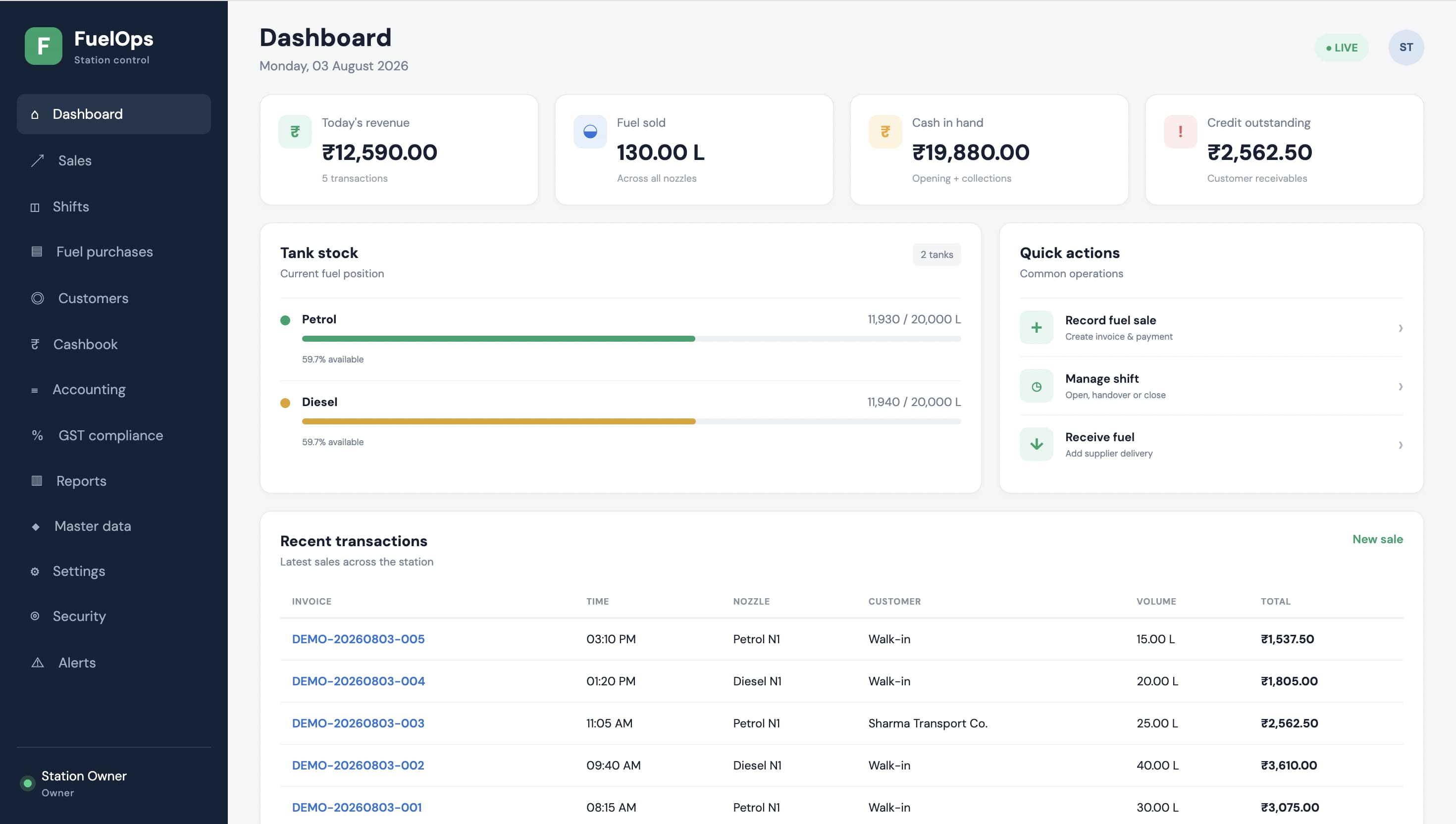
Executive overview
Replace fragmented records with one operating system.
Petrol pump teams work across nozzle readings, tank stock, shifts, payment modes, credit customers, purchases, expenses and compliance. FuelOps turns those separate records into a controlled transaction flow that operators can use daily and management can audit.
The operational reality
Many registers.
One business.
When meter readings, physical stock, payments, customer balances and accounts are maintained separately, the same day can tell several different stories.
Operator
Record a sale quickly without repeating the same information across registers.
Supervisor
Close and approve shifts using meter, payment, cash and physical-stock evidence.
Owner
See current performance, credit, stock and financial position across outlets.
From opening to approval
One shift. Six controlled stages.
Each stage creates evidence for the next, making daily closing a connected workflow instead of a reconstruction exercise.
Open shift
Capture opening meter and stock readings
Record sales
Validate the nozzle, stock, tax and payment
Update records
Move meters, inventory, credit and accounts together
Reconcile
Compare collections, meter sales and physical stock
Approve
Resolve differences with reasons and supervision
Report
Release closing, accounting and GST information
A sale is a business transaction—not only an invoice.
Stock, meters, payment, customer credit, accounting and audit effects commit together inside one database transaction.
Operational clarity
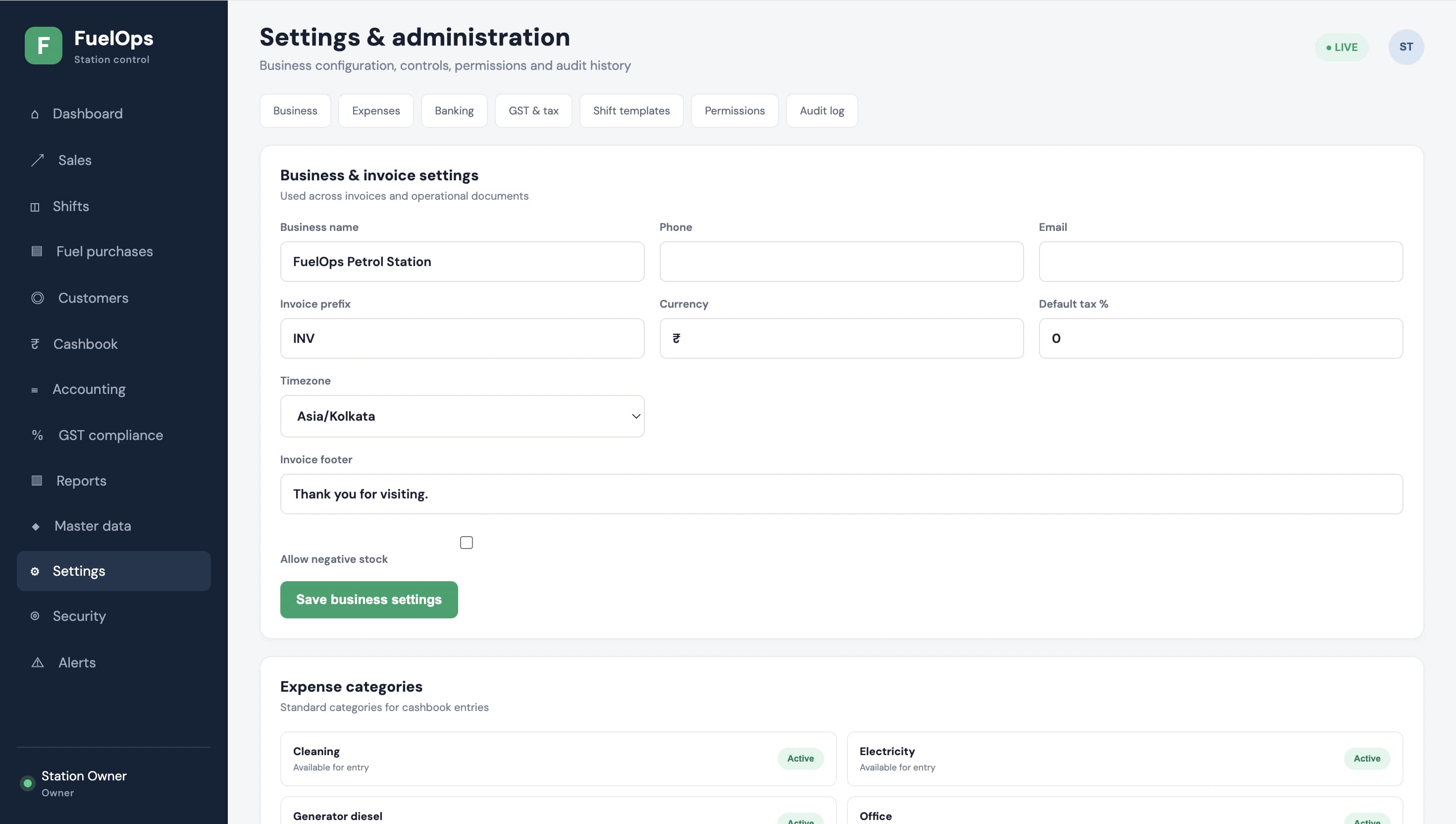
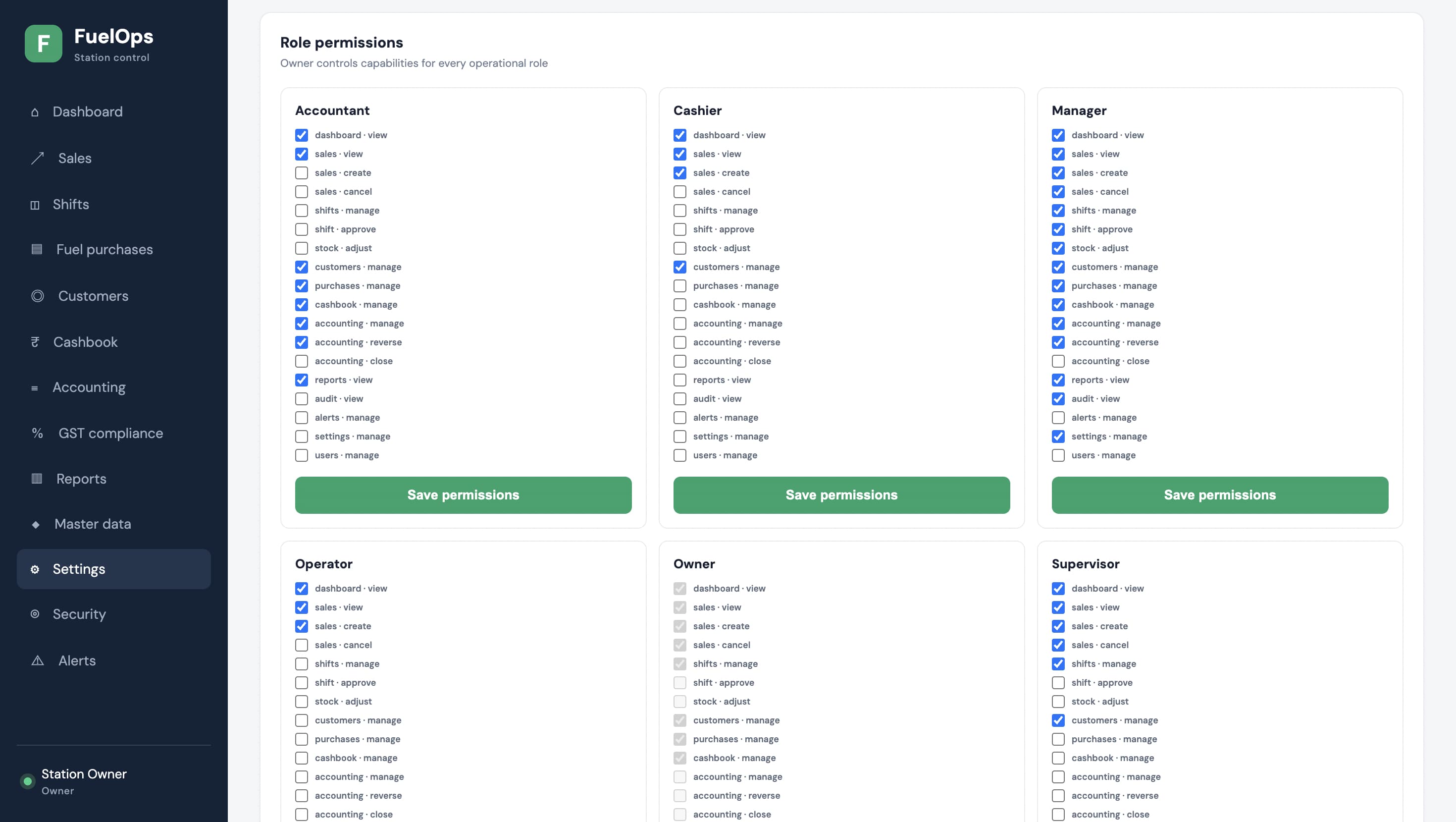
Dense workflows, made legible.
The interface separates daily station work from configuration and control while keeping a consistent navigation model.
Connected by design
Operations and finance move together.
Six capability groups connect station activity to financial control, compliance and accountability.
Sales & fuel control
B2C and B2B invoices, mixed payments, meter movement and tank deductions.
Shift reconciliation
Opening and closing readings, collection declarations, cash handover and variance review.
Credit & suppliers
Limits, outstanding balances, receipts, allocations, purchases and statements.
Accounting & banking
Balanced journals, reversals, trial balance, statement imports and grouped matching.
GST controls
Supply classification, GST registers, exports, filing details and period locking.
Security & audit
Tenant isolation, permissions, approvals, audit logs and reversal-based corrections.
Technical implementation
Transactional integrity at the core.
A server-rendered Laravel application uses database transactions, row locking, tenant middleware and permission checks around critical workflows.
Fast, task-focused station and management workspaces.
Validation, authorization, workflow and transaction boundaries.
Row locking, balanced journals, audit logs and tenant isolation.
Reversals over silent edits
Posted activity remains explainable through reasons, approvals, reversal records and locked reporting periods.Measure operational control honestly
A framework for evidence—not invented impact.
Production outcome figures were not supplied, so the case study defines the measures an implementation should track instead of presenting unsupported percentages.
Time from last sale to an approved, reconciled shift
Time to identify and resolve nozzle or tank variance
Value and age of unreconciled cash or digital payments
Outstanding balance, ageing and customer follow-up time
Time required for trial balance and month-end preparation
Active users and successfully closed shifts by outlet
Closing perspective
Control improves when every number has a trail.
FuelOps turns the daily shift into one accountable flow—from the first meter reading to the final journal and management report.
Sales, stock, collections and accounts—reconciled together.