
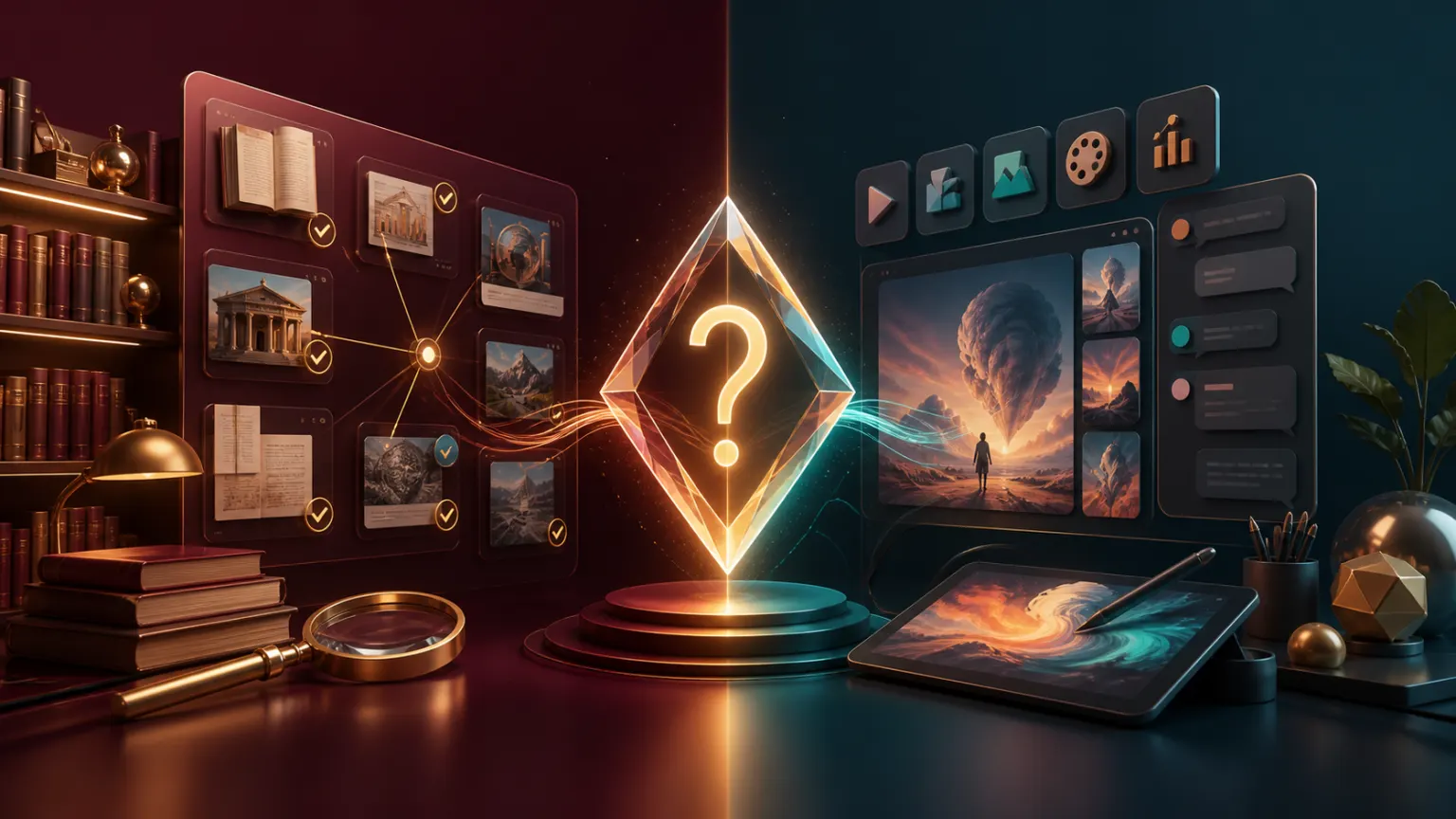
Perplexity vs ChatGPT compares a search-first answer engine with a broad general-purpose AI assistant. Perplexity makes current web research and visible sources central to the experience. ChatGPT combines search and deep research with writing, reasoning, data analysis, images, voice, projects, custom assistants and connected tools.
Perplexity vs ChatGPT at a glance
| Area | Perplexity | ChatGPT |
|---|---|---|
| Core identity | AI answer engine and research product | General conversational AI workspace |
| Web research | Default source-led experience | Search and deep research modes |
| Model choice | Multiple provider models on supported paid modes | OpenAI models selected by product and plan |
| Creation tools | Research plus file and app creation on supported plans | Writing, code, data, images, voice, Canvas, Projects and GPTs |
| Best fit | Current information and source discovery | Broad knowledge work and multimodal production |
Reviewed 8 August 2026 using official Perplexity documentation and the ChatGPT capabilities overview.
Search and citations
Perplexity is built around searching the web, synthesising sources and showing citations. Its interface encourages users to open supporting links and ask follow-up questions. ChatGPT Search can automatically browse when current information is helpful and presents inline citations or a sources panel in supported experiences.
Perplexity often feels faster for “find and summarise” work. ChatGPT can be more useful when the search result becomes one stage in a longer conversation. In both products, a citation is an invitation to verify—not proof that the sentence is correct.
Deep research
Perplexity Research performs iterative searches and produces a structured report that can be exported or shared. ChatGPT deep research is designed for multi-step investigation across online sources, uploaded material and supported connectors. Availability and limits depend on plan.
Research quality depends on scope, primary-source access, contrary evidence and citation accuracy. Give both systems the same research question, required date range and source hierarchy, then audit ten factual claims manually.
Writing and reasoning
ChatGPT is designed for a wide range of drafting, explanation, brainstorming, problem-solving and transformation tasks. Projects, Canvas and custom GPTs support longer or repeatable work. Perplexity can write and summarise effectively, but its centre of gravity remains information discovery and research.
Choose ChatGPT when you need to iterate on tone, structure, code or a deliverable after research. Choose Perplexity when the main outcome is a concise answer with accessible sources.
Files, data and creative work
ChatGPT can analyse files and images, perform data analysis, generate and edit images, use voice and work inside projects, subject to plan limits. Perplexity supports file uploads and, on eligible plans, Create files and apps for reports, spreadsheets, dashboards and simple applications. Its product has expanded beyond search, but ChatGPT remains the broader multimodal workspace.
Model choice
Perplexity Pro can offer a choice of advanced models from multiple providers for supported searches, while its Research mode automatically selects an approach. ChatGPT uses OpenAI’s models and offers plan-dependent model or mode choices. Model lists change quickly; select based on task performance, not brand familiarity.
Accuracy and source quality
Neither tool is an authority. Both can misunderstand sources, omit context, cite weak pages or make unsupported inferences. Prefer official documentation, original studies, regulators and direct company filings. Check publication dates, distinguish facts from estimates and open every source used for a consequential decision.
Pricing and plans
Both offer free access with limits and paid consumer and enterprise options. Perplexity separates capabilities across Standard, Pro, Max and enterprise tiers, while ChatGPT provides free and paid individual or workplace plans. Compare research allowances, file limits, model access, connectors, privacy controls and seats rather than one headline price.
Who should choose each?
Choose Perplexity if:
- Your day begins with current web research.
- You want citations visible by default.
- You compare many sources and models.
- Fast discovery matters more than an all-purpose creative suite.
Choose ChatGPT if:
- You need one assistant for research, writing, data, code, files and images.
- You organise recurring work in Projects or custom GPTs.
- Voice and multimodal creation matter.
- Research must continue into a polished deliverable.
Final verdict
Perplexity is the more focused research and answer engine. ChatGPT is the more versatile general AI workspace. Use Perplexity to discover and triangulate sources; use ChatGPT when you need to reason, create and iterate across several media. For high-stakes work, verify both independently.
Frequently asked questions
Is Perplexity more accurate than ChatGPT?
Not universally. Perplexity foregrounds sources, which helps verification, but either product can make errors or cite weak evidence.
Does ChatGPT provide citations?
Yes, Search and deep research responses can include citations and source links.
Can Perplexity replace ChatGPT?
It may replace ChatGPT for search-heavy users, but ChatGPT provides a broader set of creation, analysis and productivity tools.